I recently saw the Coen brothers' remake of the 1969 classic True Grit, based on the novel by Charles Portis. The film stars Jeff Bridges (formerly John Wayne) as the aging and cantankerous U.S. Marshall Reuben "Rooster" Cogburn. When an Arkansas man is killed in cold blood by the outlaw Tom Chaney (Josh Brolin), his precocious fourteen-year-old daughter, Mattie Ross (Hailee Steinfeld), vows to bring the killer to justice, and hires Coghburn to help her. Joined by LaBoeuf (Matt Damon), a pompous Texas ranger who also has a claim on Chaney, the unlikely pair pursue the outlaw and his gang into Indian territory.
The film begins with a verse from Proverbs: "The wicked flee while no man pursueth" (28:1a). This is a clear reference to Chaney who, after killing Mattie's father and stealing two California gold pieces and a horse, flees the small frontier town, despite the fact that none "could be bothered to give chase." This is consonant with the character's cowardice and slow-wit, but it is also indicative that he still retains a shred of conscience. Indeed, Mattie says, Chaney "must learn that there is nothing free in this world, except the grace of God." The line might strike the viewer as somewhat out of place; what, after all, does God's grace have to do with a story primarily concerned with earthly justice?
[SPOLER ALERT] In the end, Cogburn, with the help of Mattie and LaBoeuf, gets his man, whom Mattie has the pleasure of shooting herself. However, the recoil from the rifle knocks her backward into a pit where she is bitten by a rattlesnake. Cogburn pulls her from the pit, attempts to extract the poison, and rides all day and night to deliver the injured girl to a doctor. As a delirious Mattie looks to the starry heavens, she murmurs, "He's getting away." "Who's getting away, sis?" Cogburn asks. "Chaney," she responds. The line is, I would suggest, an intimation that Chaney, having been served justice on earth, has received grace and mercy in heaven.
In fact, I believe that the entire film is--aside from a rousing good Western--a sustained reflection on justice and mercy (i.e. grace), which are not mutually exclusive categories. Recall Mattie's comment about "the grace of God". This is the law of love, by which God says, "I desire mercy, and not sacrifice" (Mat 9:13). This does not mean that criminals like Chaney should go unpunished, which would be a simplistic denial of justice. It does, however, mean that justice must be tempered by mercy, something that Mattie learns the hard way. In the end, we learn that while Cogburn saved Mattie's life, the doctor could not save her arm, which has been amputated. The symbolism is clear: Mattie's single-minded search for justice has taken a part of her. She is, ever after, an incomplete woman.
Indeed, the true model of both justice and mercy (or love) in the film is the uncouth--and often drunken--Cogburn, who selflessly risks his own life to save Mattie's. He descends into the snake pit in order to pull Mattie out (recall Christ's descent into hell), extracts the poison from her hand (note the close association in Latin of the words for "healer" and "savior"), and delivers her to safety. Not only is Mattie an icon of the fallen soul, but Cogburn is an icon of Christ who heals and saves.
The thematic meatiness aside, the film also boasts some wonderful Old Western action. Particularly delightful is the climactic scene wherein Cogburn rides one against four, reigns in teeth, firing two navy pistols. "I mean to kill you today Ned [the film's other villain], or see you hanged" says Cogburn. "I call that bold talk for a one-eyed fat man" taunts "Lucky" Ned Pepper. "Ned, you son of a b***h!" Cogburn cries, as he charges forward, guns blazing. You can almost hear the Duke laughing with glee from his seat where Justice and Mercy reigns. In fact, it is reminiscent of the second half of that verse from Proverbs: "but the righteous are bold as a lion" (28:1b).
Highly recommended! The Brothers Coen are (to employ a Hebrew pun) the high priests of film!
03 January 2011


28 December 2010
The Catholic Priority of Truth

I recently had a conversation with my English professor that reminded me of the prevailing attitude toward Pope Benedict XVI, especially among intellectuals. I had met with him to discuss my research paper, but somehow the conversation turned to matters of faith. My professor commented on the pontiff's perceived unconsciousness of his political influence. He mentioned (predictably) the recent opening of the canonization process for Venerable Pope Pius XII, frequently accused of indifference toward the Shoah, and the lifting of the excommunications on members of the Society of St. Pius X, including Bishop Williamson, an infamous Holocaust denier.
I explained that Pius XII harbored hundreds of Jews within the walls of the Vatican itself, and instructed religious houses across Europe to do the same. So grateful was the Chief Rabbi of Rome, Israel Zolli, that he converted to Catholicism, taking the name Eugenio, Pius XII's baptismal name. Regarding the Williamson debacle, I explained that while the illicit ordination of bishops is an impediment to full communion with the Church, stupidity is not. Since the members of the SSPX have repented of that crime, canonically, the excommunications must be lifted. Still, he countered, I could not deny that these actions were impolitic. Perhaps.
However, as I left his office, that stubborn and most Catholic of questions weighed on my mind: But is it true? Is it just to deny Pius XII beatification merely because of the slanders against him? Is it fair to deny full communion with the Church to those who have repented of the sin for which they were excommunicated in the first place? Ultimately, it's a matter of differing priorities. For secular intellectuals, many of whom deny man's ability to know truth with certainty, the priority is political advantage in some form or another. Not so for Catholics. Sebastian, in Evelyn Waugh's masterpiece Brideshead Revisited, observed that "everything they think important is different from other people." For Catholics, who vehemently affirm man's ability to know truth with certainty, the priority is the proclamation of that truth which sets us free (John 8:23).
If one desires to understand the mind of the Church and its priorities, Pope Benedict's new book, Light of the World: The Pope, the Church and the Sign of the Times, is an excellent guide. As eminent theologian George Weigel writes in the Preface:
World political leaders see the flow of history in terms of interests, alliances, and power. Intellectuals of international repute perceive humanity in terms of their philosophical, historical, or scientific theories.... Popes, if they have the wit and the stomach for it [Benedict does], see the whole picture.... (ix)
This broadness of vision derives not only from the Holy Father's close and frequent contact with bishops and faithful from around the world, but from his grounding in Christ, the Truth whom we can know personally. He explains how Christ-who-is-Truth frees us from the "dictatorship of relativism":
The truth comes to rule, not through violence, but rather through its own power.... [Jesus] does not defend the truth with legions but rather makes it visible through his Passion and thereby implements it. (51)
And this, brothers and sisters, is the essential difference between Catholicism and every other philosophical system: the proclamation of the Truth through Love. It is the bent-but-unbroken logic of the Cross.
25 December 2010
A Southern Comfort Christmas (Sort Of)

Brothers and Sisters,
A very Merry Christmas to all!
This Christmas I had the great privilege to hear Midnight Mass in Savannah's historic Cathedral of Saint John the Baptist. Bishop Kevin Boland presided and gave the homily. I was particularly struck by His Excellency's concern for two groups of Catholics: those who have fallen away and those who are persecuted.
Regarding fallen away Catholics, he recalled the now-famous "Catholics Come Home" campaign, in which the Diocese of Savannah is participating. He observed that there are (according to a recent study) several reasons that Catholics have left the Church, but none so frequent as the fact that many are frankly too lazy to attend mass on Sunday mornings (although, with the advent of Saturday Vigil masses and Sunday evening masses, this should no longer be a problem). He reminded his listeners that the practice of our faith always comes at a price, be it great or small. For us in the United States, where we are blessed with religious freedom and peace, the price is comparatively small.

For persecuted Catholics in such places as Iraq and Pakistan, however, the price is great. Many, such as those martyred in the All Saint's Eve attack on Our Lady of Salvation Syriac Catholic Cathedral in Baghdad, have paid with their lives. The violence, instigated by Muslim jihadists, has caused Iraqi Christians to cancel their Christmas festivities this year. Let us not forget during this season of peace that many of our brothers and sisters in the faith still live under a pall of fear. Let us pray for the relief of the persecuted and for the conversion of the persecutors, begging the intercession of the Martyrs of Baghdad.
Ultimately, Bishop Boland said, the mission of the Church remains the same as in centuries past: that Jesus Christ, the Prince of Peace, be born in every human heart. Only then can there be true and lasting peace on earth. Let's get busy.
Here is the well-known tv spot encouraging Catholics to "come home":
And here is a beautiful "Hail Mary" sung in Syriac:
May the Infant Jesus, Word made Flesh and Prince of Peace, be born again in your hearts this Christmas season.
20 December 2010
Mañanitas for the Morenita

Brothers and Sisters,
With exams finished and papers turned in, this blogger is officially ready for Christmas! We will not, alas, be spending Christmas amongst the snow-covered splendor of Michigan. As in years past, we will be spending this Christmas with our good friends (my sister's godparents) in Savannah, Georgia. Though we will miss the winter wonderland that is the (ahem) Spartan State, we will have a chance to golf, wade along Tybee Beach, and attend the always beautiful Midnight Mass in Savannah's historic Cathedral of Saint John the Baptist.
In preparation to celebrate the Solemnity of the Nativity of Our Lord, I had the privilege to join (if in spirit only) with our brothers and sisters south of the border in honoring the woman who made it all possible. Readers might not be familiar with the beautiful customs associated with the feast of Our Lady of Guadalupe, affectionately known amongst Mexicans as "la Morenita" or "the Little Dark One" (my very rough translation). This feast, which commemorates the appearance of the Blessed Mother to Saint Juan Diego in 1531, is the patronal feast of Mexico and, in a sense, of all the Americas. In fact, Venerable John Paul the Great (i.e. Pope John Paul II) named her "Queen of Mexico and Empress of America" in 2002. The reason is simple: she achieved by love what waves of Spanish Conquistadors could not achieve by force, the conversion of the native peoples of Mexico to her divine Son. In a startling turn of history, an entire nation was converted to Christ by the sole intervention of the Mother of Christ. She is the "misionaria celestial", the "heavenly missionary"!
To honor the "Morenita", millions of devout Christians flood churches across Mexico to sing songs of love before replicas of the "Tilma" (the cloak of Saint Juan Diego on which an image of the Virgin miraculously appeared) or, at the Basilica in Tepeyac, the Tilma itself. These festivities, called "Las Mañanitas a la Virgen de Guadalupe" and televised annually by Univision, begin at midnight and carry on into the wee hours, culminating with the Holy Mass. Often, in a moving display of national devotion, they are led by Mexican celebrities:
I'm thinking that staying up late to watch "Las Mañanitas" might well become a personal tradition!
Here's a helpful link to the Catholic Education Resource Center regarding the science and symbolism of the Tilma.
Virgen de Guadalupe, reina de México y emperatriz de América, ruega por nosotros!
05 December 2010
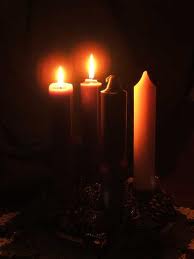
Come, Lord Jesus
Brothers and Sisters,
This Second Sunday of Advent marks my triumphant return to the blogosphere after more than a year's absence. Much has happened since I last posted. I had a brief sojourn in the seminary, our bishop has ordained four new priests, all good men and true, for the Diocese of Lansing, my best friends have gotten married (many blessings upon Brian and Katie), the mighty Spartans have won the Big Ten title, and I find myself preparing, at long last, to graduate. Spring has turned to summer, and summer to autumn, and autumn to winter... repeat.
And now Advent 2010 is well underway, as we prepare to welcome the Divine Child into our hearts this Christmas. I promise (no, really) to post much more often in the months ahead, but not before term papers and final exams are well out of the way. Until then, please enjoy this stirring rendition of "Let All Mortal Flesh Keep Silence":
Granted, the images are somewhat trippy, and despite the lyrics the video looses the sense of the hymn's Eucharistic origins, but it is still moving.
For something with a bit more Greek flavor, here's the hymn in its original form:
Come, Lord Jesus, come quickly!
27 March 2009
Father Barron: What's Wrong Here?
Here is one of my living idols, Father Robert Barron of the Archdiocese of Chicago and Word on Fire Ministries. He is an excellent and insightful theologian and an intriguing commentator on popular culture. I think you'll enjoy his take on all things sacred and profane.
Here he comments on Kerry Kennedy's Being Catholic Now and the error of reducing Catholicism to "social justice".
In His peace.
26 February 2009
Rend Your Hearts
Praised be Jesus Christ!
My brothers and sisters,
One of the most common homily topics heard on Ash Wednesday is taken from this verse in Joel: "Rend your hearts, not your garments" (2:13). As I sat watching people whom I had never seen in church before file into the pews by the hundreds--as they had at every one of our back-to-back masses that day--I was reminded precisely why.
We have an unfortunate phrase in Catholicism, "C and E Catholics", signifying those Catholics whom most see only twice a year, on Christmas and Easter. One may assume that their sense of religious obligation does not extend beyond these two major feats. However, I think it would be more accurate to say "C, E and A Catholics", the "A" standing for Ash Wednesday, there being a disproportionate number of Catholics who turn out on this day.
Why disproportionate? Well, Christmas and Easter, as stated above, are major feasts and so much a part of the culture that one need not be overly pious to drag oneself out of bed and away from that square idol in the living room to attend mass. Ash Wednesday, by comparison, is a rather minor liturgical observance; at least it is not a holy day of obligation. And yet, so many Catholics treat it as such. These same Catholics, in fact, easily skip mass every Sunday and most holy days. How do I know? Because my parish does not generally offer seven full-to-capacity masses on a given Sunday.
But then, my parish doesn't generally mark worshipers' forheads with a cross of ashes every Sunday either. And here, my brothers and sisters, I believe I have struck at the sad root of the problem. Is it probable that these Catholics, so conspicuously absent 49 weeks out of the year, truly intend to "repent and follow the Gospel"? Is it probable that they intend to maintain the penitential spirit of Lent throughout the 40 Days? Fine. Then we shall expect to see as many as attended our Ash Wednesday masses on the First Sunday of Lent, and every Sunday therafter. Forgive me if I don't hold my breath. Rend your hearts, not your garments!
My brothers and sisters, I'm afraid that so many of us have not and never intended to rend our hearts. Rather, we relish the opportunity to wear our faith on our sleeves--or rather, our foreheads--in an admittedly impressive display of our relgious identity. This is precisely the opposite of genuine repentance. Our Lord counsels in the Gospel for the day, "When you fast, do not look gloomy like the hypocrites," who "neglect their appearance so that they may appear to others to be fasting." Rather, He says, "anoint your head and wash your face" (Mt 6:16, 17).
Jesus is not concerned here with our physical apperance but with our spiritual disposition. Prayer, fasting and almsgiving done in a spirit of pride are worthless in the eyes of God. Why? Because only when God Himself, and not human affirmation, is the desire of our hearts, only then can we let Him in. And only then can His love transform us into the creatures He created us to be. And brothers and sisters, this is why we wear ashes, to remind ourselves and everyone we meet that we need Him, we need His transforming love, becasue without Him, we are nothing but ashes. "Remember, man," He says to us, "you are dust, and to dust you shall return" (Gen 3:19).
I don't complain that they came. Good for them. I pray that the Holy Spirit may begin to work in their hearts in amazing ways because of it. Would that every soul who attended our Ash Wednesday masses and received ashes attend mass every Sunday of the year, and every holy day too. Would that every soul rend their hearts, not their garments, and thus let the Lord of Life in.
In His peace.
Note: I know I've been gone for quite a while; I hope to blog more often--perhaps weekly--as part of my Lenten obsevance. Until then, may you rest in the Hearts of Jesus and Mary.
My brothers and sisters,
One of the most common homily topics heard on Ash Wednesday is taken from this verse in Joel: "Rend your hearts, not your garments" (2:13). As I sat watching people whom I had never seen in church before file into the pews by the hundreds--as they had at every one of our back-to-back masses that day--I was reminded precisely why.
We have an unfortunate phrase in Catholicism, "C and E Catholics", signifying those Catholics whom most see only twice a year, on Christmas and Easter. One may assume that their sense of religious obligation does not extend beyond these two major feats. However, I think it would be more accurate to say "C, E and A Catholics", the "A" standing for Ash Wednesday, there being a disproportionate number of Catholics who turn out on this day.
Why disproportionate? Well, Christmas and Easter, as stated above, are major feasts and so much a part of the culture that one need not be overly pious to drag oneself out of bed and away from that square idol in the living room to attend mass. Ash Wednesday, by comparison, is a rather minor liturgical observance; at least it is not a holy day of obligation. And yet, so many Catholics treat it as such. These same Catholics, in fact, easily skip mass every Sunday and most holy days. How do I know? Because my parish does not generally offer seven full-to-capacity masses on a given Sunday.
But then, my parish doesn't generally mark worshipers' forheads with a cross of ashes every Sunday either. And here, my brothers and sisters, I believe I have struck at the sad root of the problem. Is it probable that these Catholics, so conspicuously absent 49 weeks out of the year, truly intend to "repent and follow the Gospel"? Is it probable that they intend to maintain the penitential spirit of Lent throughout the 40 Days? Fine. Then we shall expect to see as many as attended our Ash Wednesday masses on the First Sunday of Lent, and every Sunday therafter. Forgive me if I don't hold my breath. Rend your hearts, not your garments!
My brothers and sisters, I'm afraid that so many of us have not and never intended to rend our hearts. Rather, we relish the opportunity to wear our faith on our sleeves--or rather, our foreheads--in an admittedly impressive display of our relgious identity. This is precisely the opposite of genuine repentance. Our Lord counsels in the Gospel for the day, "When you fast, do not look gloomy like the hypocrites," who "neglect their appearance so that they may appear to others to be fasting." Rather, He says, "anoint your head and wash your face" (Mt 6:16, 17).
Jesus is not concerned here with our physical apperance but with our spiritual disposition. Prayer, fasting and almsgiving done in a spirit of pride are worthless in the eyes of God. Why? Because only when God Himself, and not human affirmation, is the desire of our hearts, only then can we let Him in. And only then can His love transform us into the creatures He created us to be. And brothers and sisters, this is why we wear ashes, to remind ourselves and everyone we meet that we need Him, we need His transforming love, becasue without Him, we are nothing but ashes. "Remember, man," He says to us, "you are dust, and to dust you shall return" (Gen 3:19).
I don't complain that they came. Good for them. I pray that the Holy Spirit may begin to work in their hearts in amazing ways because of it. Would that every soul who attended our Ash Wednesday masses and received ashes attend mass every Sunday of the year, and every holy day too. Would that every soul rend their hearts, not their garments, and thus let the Lord of Life in.
In His peace.
Note: I know I've been gone for quite a while; I hope to blog more often--perhaps weekly--as part of my Lenten obsevance. Until then, may you rest in the Hearts of Jesus and Mary.
Subscribe to:
Comments (Atom)