In ancient Rome, Christians would rescue weak, deformed and unwanted infants that had been left to die by exposure. That traditon continues today; two thousand years later, the Catholic Church is still the first and best advocate of the most vulnerable among us, from conception to natural death.
As I have said before, this is not a political blog; my purpose is to witness to Jesus and His Gospel, to provide a uniquely Catholic perspective to every facet of life. To that end, I must--again--denounce Senator Obama as a man opposed to that Gospel and to Christ insofar as he is opposed to the sanctity and integrity of human life. The video below will explain in painful detail what I mean.
Pray for life, pray for our leaders... O Lord, have mercy upon our nation!
In His peace.
28 August 2008


12 August 2008
Detachment
Saint John of the Cross (with Teresa of Jesus, founder of the Discalced Carmelite Reform), a revered Doctor of the Church, wrote much on the topic of detachment. That is, that we as Christians should be detached from all temporal things, even those which are themselves good or profitable, such as our human relationships.
We may understand well enough why Saint John would counsel us in detachment from something like wealth, status or power. We need only look around and see how money is often the cause of much anxiety, the enemy of inner peace; the poor break laws to get money, the rich break laws to keep it, and both break more than laws in this plutonian pursuit, leaving in their wake a litter of broken hearts and broken homes. Such is the result when people try to fill with riches the void that only God can fill. And if any suffer more than these two extremes of the economic strata, it is those in the middle who from below and from above are subjected to the perennial lie: Money can indeed buy happiness. The expression "They had just enough money to make them miserable", comes readily to mind.
But what of those things which are obviously good, even of God? What of our friendships and marriages, anything that belongs to the sphere of human relationships? Yes, from these too, Saint John insists, we must be detached, good though they are and far superior to material wealth or status. As Scripture says, "Were one to offer all he owns to purchase love, he would be roundly mocked" (Song of Songs 8:7). Even these, however, can never fill the void in every human heart; loneliness, which is the human condition, can only ever be fully remedied by the indwelling of the Spirit of love and truth.
This does not mean that we must (necessarily) divest ourselves of all worldly wealth, status, power and (God forbid!) relationships, hermit-like. We need not run off to the mountain or the desert to escape temptation for, as the Gospel clearly demonstrates, even there (especially there) do we meet temptation (cf. Matthew 4:1-11). But everything must be ordered to the service of God and judged, for good or for ill, according to the extent that they serve God. If your riches empower you for the service of God, thank Him for them; if your riches are a consistent occasion of sin and grief, thank Him for them and then give them back.
Think about this the next time you get that whopping paycheck (some of which you will save, and some of which you spend on Christmas presents, a dinner out with friends and--one hopes--some charitable cause): What if God took it all away? Would it affect my relationship with my family, my friends... God Himself? Would the loss pull me down into despair? Would my ability to trust and to love be crippled? Would I have the peace of spirit to learn and grow from the experience?
Put another way, our human loves must never become possessive. (See what a difference such slight modifications of language make.) Perfect love (Latin caritas, Greek agape) is not only non-possessive, it is self-giving love... sacrificial love, for which Christ died on the Cross. And this is yet another paradox of the Cross: He loved the world too much to be bound to it.

"Love consists not in feeling great things but in having great detachment and in suffering for the Beloved." Saint John of the Cross
In His peace.
We may understand well enough why Saint John would counsel us in detachment from something like wealth, status or power. We need only look around and see how money is often the cause of much anxiety, the enemy of inner peace; the poor break laws to get money, the rich break laws to keep it, and both break more than laws in this plutonian pursuit, leaving in their wake a litter of broken hearts and broken homes. Such is the result when people try to fill with riches the void that only God can fill. And if any suffer more than these two extremes of the economic strata, it is those in the middle who from below and from above are subjected to the perennial lie: Money can indeed buy happiness. The expression "They had just enough money to make them miserable", comes readily to mind.
But what of those things which are obviously good, even of God? What of our friendships and marriages, anything that belongs to the sphere of human relationships? Yes, from these too, Saint John insists, we must be detached, good though they are and far superior to material wealth or status. As Scripture says, "Were one to offer all he owns to purchase love, he would be roundly mocked" (Song of Songs 8:7). Even these, however, can never fill the void in every human heart; loneliness, which is the human condition, can only ever be fully remedied by the indwelling of the Spirit of love and truth.
This does not mean that we must (necessarily) divest ourselves of all worldly wealth, status, power and (God forbid!) relationships, hermit-like. We need not run off to the mountain or the desert to escape temptation for, as the Gospel clearly demonstrates, even there (especially there) do we meet temptation (cf. Matthew 4:1-11). But everything must be ordered to the service of God and judged, for good or for ill, according to the extent that they serve God. If your riches empower you for the service of God, thank Him for them; if your riches are a consistent occasion of sin and grief, thank Him for them and then give them back.
Think about this the next time you get that whopping paycheck (some of which you will save, and some of which you spend on Christmas presents, a dinner out with friends and--one hopes--some charitable cause): What if God took it all away? Would it affect my relationship with my family, my friends... God Himself? Would the loss pull me down into despair? Would my ability to trust and to love be crippled? Would I have the peace of spirit to learn and grow from the experience?
Put another way, our human loves must never become possessive. (See what a difference such slight modifications of language make.) Perfect love (Latin caritas, Greek agape) is not only non-possessive, it is self-giving love... sacrificial love, for which Christ died on the Cross. And this is yet another paradox of the Cross: He loved the world too much to be bound to it.

"Love consists not in feeling great things but in having great detachment and in suffering for the Beloved." Saint John of the Cross
In His peace.
22 July 2008
The Barque of Peter
So... long time no blog. I apologize to my readers (whose existence I am inclined to doubt, but you may make a believer out of me by posting your words of thanks, praise and general accolade... ahem) for my absence. That said...
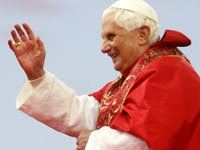
The Barque of Peter--along with a thirteen-boat flotilla--made port in Sydney Harbor Thursday and the Successor of Peter was met, as expected, to youthful cries of jubilation, the familiar papal soccer-chant ("Benedetto! Viva il Papa!"), and even a colorful Aboriginal honor guard. There is no question; Pope Benedict XVI knows how to arrive in style. But this maritime mode of transportation is more than mere theatrics.
Arrival by boat underscores well--as I am sure is the Holy Father's intention--the origins of the Petrine ministry, and it's various implications. Of His many disciples, our Lord chooses Peter, the fisherman, to be the Prince of Apostles and Head of His Church on earth. Peter, who denied the possibility of His Passion, Peter whom our Lord himself called "Satan" (Matthew 16: 22, 23), Peter who denied even knowing Him (Matthew 16: 69-75). A final observation completes our picture of this first and least of Apostles: the relics that presently reside beneath the high altar of the Vatican Basilica indicate that Peter was a large man. So that's it: A big dumb guy named Pete is chosen as the "Rock" upon which our Lord would build His Church, against whom the gates of hell would not prevail (Mathew 16:18).
What are we to make of this startling fact? I would assert that the Lord chooses the least of people--children, house-wives, blue-collar workers, government drones, wacked-out revolutionaries and ex-whores--even shy professorial types--to build His kingdom on earth. (Where on earth did this Man learn administration skills?) The import for World Youth Day is that youth can and should aspire to holiness, no matter what their particular walk of life, because "it was not you who chose me, but I chose you" (John 15:16). This "choosing" makes all the difference in the world. As a wise priest once said, "God does not ask that we be worthy; He only asks that we be willing." And the Spirit will give us the necessary gifts (charisms): "I will ask the Father, and he will send you another Advocate... the Spirit of truth" and "he will guide you" (John 14:16, 17, 16:13).
Of course, the Holy Father said this far more eloquently than I ever could:
This is our Christian faith! Our risen Lord has revealed Himself to us, we who are poor sinners, and calls us to repentance and baptism; He pours His Spirit upon us, the Spirit that drives out fear and empowers us to proclaim the Gospel!
In His peace.
Coming soon... "Babel, Cenacle... Ranwick".
The Barque of Peter--along with a thirteen-boat flotilla--made port in Sydney Harbor Thursday and the Successor of Peter was met, as expected, to youthful cries of jubilation, the familiar papal soccer-chant ("Benedetto! Viva il Papa!"), and even a colorful Aboriginal honor guard. There is no question; Pope Benedict XVI knows how to arrive in style. But this maritime mode of transportation is more than mere theatrics.
Arrival by boat underscores well--as I am sure is the Holy Father's intention--the origins of the Petrine ministry, and it's various implications. Of His many disciples, our Lord chooses Peter, the fisherman, to be the Prince of Apostles and Head of His Church on earth. Peter, who denied the possibility of His Passion, Peter whom our Lord himself called "Satan" (Matthew 16: 22, 23), Peter who denied even knowing Him (Matthew 16: 69-75). A final observation completes our picture of this first and least of Apostles: the relics that presently reside beneath the high altar of the Vatican Basilica indicate that Peter was a large man. So that's it: A big dumb guy named Pete is chosen as the "Rock" upon which our Lord would build His Church, against whom the gates of hell would not prevail (Mathew 16:18).
What are we to make of this startling fact? I would assert that the Lord chooses the least of people--children, house-wives, blue-collar workers, government drones, wacked-out revolutionaries and ex-whores--even shy professorial types--to build His kingdom on earth. (Where on earth did this Man learn administration skills?) The import for World Youth Day is that youth can and should aspire to holiness, no matter what their particular walk of life, because "it was not you who chose me, but I chose you" (John 15:16). This "choosing" makes all the difference in the world. As a wise priest once said, "God does not ask that we be worthy; He only asks that we be willing." And the Spirit will give us the necessary gifts (charisms): "I will ask the Father, and he will send you another Advocate... the Spirit of truth" and "he will guide you" (John 14:16, 17, 16:13).
Of course, the Holy Father said this far more eloquently than I ever could:
Almost two thousand years ago, the Apostles, gathered in the upper room together with Mary and some faithful women, were filled with the Holy Spirit (cf. Acts 1:14; 2:4). At that extraordinary moment, which gave birth to the Church, the confusion and fear that had gripped Christ’s disciples were transformed into a vigorous conviction and sense of purpose. They felt impelled to speak of their encounter with the risen Jesus whom they had come to call affectionately, the Lord. In many ways, the Apostles were ordinary. None could claim to be the perfect disciple. They failed to recognize Christ (cf. Lk 24:13-32), felt ashamed of their own ambition (cf. Lk 22:24-27), and had even denied him (cf. Lk 22:54-62). Yet, when empowered by the Holy Spirit, they were transfixed by the truth of Christ’s Gospel and inspired to proclaim it fearlessly. Emboldened, they exclaimed: repent, be baptized, receive the Holy Spirit (cf. Acts 2:37-38)! (Festival of Welcome Address)
This is our Christian faith! Our risen Lord has revealed Himself to us, we who are poor sinners, and calls us to repentance and baptism; He pours His Spirit upon us, the Spirit that drives out fear and empowers us to proclaim the Gospel!
In His peace.

Coming soon... "Babel, Cenacle... Ranwick".
17 July 2008
Chatter
I love World Youth Day. I mean, alot. Every third summer I sit at home, glued to my television or computer screen, lamenting the fact that I have neither the time nor the means (or, in my younger days, the parental consent) to be there, wherever "there" may be, with the Holy Father and the youth of the world. This summer is no different.
Again, the youth of the world gather around the Supreme Pontiff, around Cardinal Pell and the bishops of the Universal Church, to proclaim to cynic and skeptic alike that their hope is in Jesus Christ, who sends us His Spirit, giving us power to "be [His] witnesses... to the ends of the earth" (Acts 1:8, WYD08 theme). One could say that this is, implicitly, the theme of every World Youth Day, a theme that never fails to perplex secular commentators. As many an adolescent has complained of his or her parents (or teachers, or coaches, et cetra), "They just don't get it." In the case of the secular media, such a complaint is usually justified. What's worse, they don't get that they don't get it.
Such was the case with the Australian media commentators charged with covering the opening mass with Cardinal Pell. The mass was, as expected, spectacular. Not in the artificial, commercial sense of "showy". It was spectacular in the sense of awe that only the Catholic Church in all her glory, her unity-in-diversity, gathered in a single place, always inspires. Here in Sydney were gathered youth from every language and nation to worship the Lamb (Revelation 7:9). Now I can understand the tendency to speak of such occasions in political terms, as a sign of international cooperation, fraternity and peace.
In that respect, I do not blame these well-intentioned Aussies for not getting it. They are in good company. I would simply remind them and every other media commentator that these World Youth Days are more than political theatre, more than a jumping on the peace train, with Pope Benedict in the part of Cat Stevens. These youth are gathered with a common purpose, the worship of God, specifically in the Holy Sacrifice of the Mass, which is both the sign and sacrament of Christian unity (CCC 1396, 1398).
Just what don't these blissfully oblivious pundits get? They don't get that the incessant chatter they insist on imposing on the ancient ritual of the Mass... just doesn't matter. They don't get that, perhaps thousands of miles away, thousands of Catholics, young and old, are glued to their television or computer screens, lamenting the fact that they can't be there and shouting, "SHUT UP ALREADY!" They didn't get that their chatter is so profoundly different from the gift of the Spirit on Pentecost, the gift that empowered the Apostles to be the witnesses of Jesus to the ends of the earth.
In His peace.

Coming soon... "The Barque of Peter".
Again, the youth of the world gather around the Supreme Pontiff, around Cardinal Pell and the bishops of the Universal Church, to proclaim to cynic and skeptic alike that their hope is in Jesus Christ, who sends us His Spirit, giving us power to "be [His] witnesses... to the ends of the earth" (Acts 1:8, WYD08 theme). One could say that this is, implicitly, the theme of every World Youth Day, a theme that never fails to perplex secular commentators. As many an adolescent has complained of his or her parents (or teachers, or coaches, et cetra), "They just don't get it." In the case of the secular media, such a complaint is usually justified. What's worse, they don't get that they don't get it.
Such was the case with the Australian media commentators charged with covering the opening mass with Cardinal Pell. The mass was, as expected, spectacular. Not in the artificial, commercial sense of "showy". It was spectacular in the sense of awe that only the Catholic Church in all her glory, her unity-in-diversity, gathered in a single place, always inspires. Here in Sydney were gathered youth from every language and nation to worship the Lamb (Revelation 7:9). Now I can understand the tendency to speak of such occasions in political terms, as a sign of international cooperation, fraternity and peace.
In that respect, I do not blame these well-intentioned Aussies for not getting it. They are in good company. I would simply remind them and every other media commentator that these World Youth Days are more than political theatre, more than a jumping on the peace train, with Pope Benedict in the part of Cat Stevens. These youth are gathered with a common purpose, the worship of God, specifically in the Holy Sacrifice of the Mass, which is both the sign and sacrament of Christian unity (CCC 1396, 1398).
Just what don't these blissfully oblivious pundits get? They don't get that the incessant chatter they insist on imposing on the ancient ritual of the Mass... just doesn't matter. They don't get that, perhaps thousands of miles away, thousands of Catholics, young and old, are glued to their television or computer screens, lamenting the fact that they can't be there and shouting, "SHUT UP ALREADY!" They didn't get that their chatter is so profoundly different from the gift of the Spirit on Pentecost, the gift that empowered the Apostles to be the witnesses of Jesus to the ends of the earth.
In His peace.

Coming soon... "The Barque of Peter".
07 July 2008
Render Unto Caesar
This is not a political blog, and intentionally so. My purpose here is to witness to the perennial truths of the Gospel, not to advocate one policy over another or one politician over another, though I could and, in certain circumstances, should. However, Senator Barack Obama's abuse of Scripture, both Hebrew and Christian, in support of a fundamentally flawed and self-contradictory view of religious pluralism, impels me to speak out.
There are two things that distinguished the Roman Empire, which in many ways provides an ancient model for our American "empire": 1) supreme religious plurality and tolerance and 2) emperor worship. Among the many and varied cults that crowded the temples of the Eternal City, the worship of the emperor as the bringer of national prosperity and security was, as they say, an institution. Chesterton warned, "abolish the God and the government becomes the God" (Christendom in Dublin). While Rome did not exactly abolish God, it did the next worse thing, exalting in a national pantheon every deity who ever claimed dominion over the fates of men, which unfortunately included the likes of Nero and Domitian.
Thus it is imperative to remember that the first-century Christians were not persecuted for their tolerance of the Hebrew god, but for their intolerance of every other god, including the mighty Caesar. They were persecuted for their insistence that such titles as "son of God" were the sole property of the Son of Man, and rigidly refused to make the small concession of lending them to the emperor. Saint John speaks of this bitter trial in his Apocalypse:
Senator Obama erroneously suggests that democracy requires that believers "translate their concerns into universal, rather than religion-specific values", even as he chides secularists for their lack of religious vocabulary in a clever, but ultimately transparent attempt at moderation. What to make of such a proposal? Why cannot Senator Obama and his fellow progressives see that morality divorced from religion is wholly subjective and arbitrary, totally dependent upon the whims of the individual or the mob? When Lincoln boldly declared that our nation was "dedicated to the proposition that all men are created equal", he was really making two mutually dependent theological assertions, that men are created and that they are equal. The proposition that all men are created by God, therefore no man is God, and therefore no man may rule another is the only sure foundation of democracy. It was the Creed that cut the chains of a race enslaved.
The Roman martyrs would not leave their religious language at the door of the Forum, and so were left to the the lion's mouth in the Colosseum. The lesson here: religious pluralism is no guarantee of religious freedom and can (paradoxically) usurp that fundamental right. Let us not be deceived by false prophets who cry "peace, peace," or even "hope, hope".

There are two things that distinguished the Roman Empire, which in many ways provides an ancient model for our American "empire": 1) supreme religious plurality and tolerance and 2) emperor worship. Among the many and varied cults that crowded the temples of the Eternal City, the worship of the emperor as the bringer of national prosperity and security was, as they say, an institution. Chesterton warned, "abolish the God and the government becomes the God" (Christendom in Dublin). While Rome did not exactly abolish God, it did the next worse thing, exalting in a national pantheon every deity who ever claimed dominion over the fates of men, which unfortunately included the likes of Nero and Domitian.
Thus it is imperative to remember that the first-century Christians were not persecuted for their tolerance of the Hebrew god, but for their intolerance of every other god, including the mighty Caesar. They were persecuted for their insistence that such titles as "son of God" were the sole property of the Son of Man, and rigidly refused to make the small concession of lending them to the emperor. Saint John speaks of this bitter trial in his Apocalypse:
Fascinated, the whole world followed after the beast [the Emperor]. They worshipped the dragon [Satan] because it gave its authority to the beast; they also worshipped the beast and said, "Who can compare with the beast or who can fight against it?" (13:3, 4)
Senator Obama erroneously suggests that democracy requires that believers "translate their concerns into universal, rather than religion-specific values", even as he chides secularists for their lack of religious vocabulary in a clever, but ultimately transparent attempt at moderation. What to make of such a proposal? Why cannot Senator Obama and his fellow progressives see that morality divorced from religion is wholly subjective and arbitrary, totally dependent upon the whims of the individual or the mob? When Lincoln boldly declared that our nation was "dedicated to the proposition that all men are created equal", he was really making two mutually dependent theological assertions, that men are created and that they are equal. The proposition that all men are created by God, therefore no man is God, and therefore no man may rule another is the only sure foundation of democracy. It was the Creed that cut the chains of a race enslaved.
The Roman martyrs would not leave their religious language at the door of the Forum, and so were left to the the lion's mouth in the Colosseum. The lesson here: religious pluralism is no guarantee of religious freedom and can (paradoxically) usurp that fundamental right. Let us not be deceived by false prophets who cry "peace, peace," or even "hope, hope".

01 July 2008
Purifying the Source
The French novelist Francois Mauriac has a dictum of which I am rather fond, "purify the source." (Note to reader: I confess that I have not actually read Mauriac, but happened upon this pearl of wisdom second-hand.) Perhaps it reminds me of Saint Paul's phrase (regarding the charism of prophecy), "test everything; retain what is good" (2 Thessalonians 5:21). So we are to take what is most beautiful and true from a work of art and leave the rest.
Now I have a reputedly eclectic taste in music, so as you can probably guess I do a lot of purifying. Most would agree that Billy Joel isn't exactly on the level of the prophet Joel, either in the quality or the content of his craft. Still, I don't let that deter me from listening. It gets me through Math homework. And though there is much to purify in "Only the Good Die Young", Catholic belief and practice being what it is (and Billy's education in that particular field being what it is), there is a sliver of light that "shines in the darkness." Consider this gem:
Ouch! Let that be a warning to the Pharisees among us.
I dunno. I would like to develop this theme further (after I have read more Mauriac, or Maritain for that matter), as I think our Church and our society could definitely benefit from some source-purifying. It would, at least, allow us Christians to see the face of Christ reflected in art more often, even if the mirror be a mite spotty.
Here's a wonderful video montage in honor of the Blessed Mother featuring (you guessed it) Billy Joel's "She's Got a Way". Maybe Virginia taught Billy a thing or two? One can hope.
In His peace.
Now I have a reputedly eclectic taste in music, so as you can probably guess I do a lot of purifying. Most would agree that Billy Joel isn't exactly on the level of the prophet Joel, either in the quality or the content of his craft. Still, I don't let that deter me from listening. It gets me through Math homework. And though there is much to purify in "Only the Good Die Young", Catholic belief and practice being what it is (and Billy's education in that particular field being what it is), there is a sliver of light that "shines in the darkness." Consider this gem:
You said your mother told you
All I could give you was a reputation
Ah, she never cared for me
But did she ever say a prayer for me?
Ouch! Let that be a warning to the Pharisees among us.
I dunno. I would like to develop this theme further (after I have read more Mauriac, or Maritain for that matter), as I think our Church and our society could definitely benefit from some source-purifying. It would, at least, allow us Christians to see the face of Christ reflected in art more often, even if the mirror be a mite spotty.
Here's a wonderful video montage in honor of the Blessed Mother featuring (you guessed it) Billy Joel's "She's Got a Way". Maybe Virginia taught Billy a thing or two? One can hope.
In His peace.
28 June 2008
Vocations and the Charisms
A Scripture passage occurred to me while praying yesterday, in a charismatic prayer meeting, as it happened. I was praying especially for strength and guidance in my vocational discernment to the priesthood (and possibly to the Carmelites). It is the words of our Lord to Peter on the sea shore, after His resurrection:
Just the night before, in another prayer meeting, of which priestly discernment was the purpose, I asked the question, "To what extent will the charismatic dimension of our faith influence vocations in the future?" To which a wise priest-friend responded (and I paraphrase), "Well, baptism in the Holy Spirit is, first, a total surrender to the will of God, so to that extent, it is essential to being open and responsive to a call from the Lord."
Yes, surrender is essential; and this is the heart of what those in the charismatic renewal (like the Fathers of the Church) call "baptism in the Holy Spirit". We give ourselves totally to God. And I mean totally--none of this "Oh God, make me good, but not yet" stuff. This constant reserve, this unwillingness to let God lead us in all our ways, of which I myself am often guilty.
A personal testimony: Until quite recently, I had never seriously considered a potential call to the religious life. It was always, "Oh, it's possible, but I don't think so." Always, "I'm all about doing the will of God, but I want the relative freedoms (or what I perceived as the relative freedoms) of a diocesan priest." But my faith, and thus my vocation, have grown tremendously in the past year (especially in the past month) and as I devour Carmelite literature, I find myself attracted to Carmelite spirituality. And as I throw myself headlong into the charismatic renewal, I find myself more open and more responsive to God's call... wherever He may lead me.
So I beg you, my brothers and sisters, open your hearts and your minds to the will of God, wherever He may lead you, trusting that He wants more for you than you could possibly want for yourselves, such is His inestimable love for you. Surrender yourselves totally to the movements of the Spirit. Always sing, in the words of John Michael Talbot, "I will go Lord, if You lead me/ I will hold Your people in my heart" ("Here I am, Lord").
This video features a prayer by one of my favorite Carmelite saints, Teresa of Avila. It is translated (roughly), "Let nothing trouble you, let nothing frighten you/ He who has God lacks nothing,/All things pass, God does not change, patience achieves everything/God alone suffices."
In His peace.
Amen, amen I say to you, when you were younger you used to dress yourself and go where you wanted; but when you grow old you will stretch out your hands, and someone else will dress you and lead you where you do not want to go... Follow me. (John 21:18)
Just the night before, in another prayer meeting, of which priestly discernment was the purpose, I asked the question, "To what extent will the charismatic dimension of our faith influence vocations in the future?" To which a wise priest-friend responded (and I paraphrase), "Well, baptism in the Holy Spirit is, first, a total surrender to the will of God, so to that extent, it is essential to being open and responsive to a call from the Lord."
Yes, surrender is essential; and this is the heart of what those in the charismatic renewal (like the Fathers of the Church) call "baptism in the Holy Spirit". We give ourselves totally to God. And I mean totally--none of this "Oh God, make me good, but not yet" stuff. This constant reserve, this unwillingness to let God lead us in all our ways, of which I myself am often guilty.
A personal testimony: Until quite recently, I had never seriously considered a potential call to the religious life. It was always, "Oh, it's possible, but I don't think so." Always, "I'm all about doing the will of God, but I want the relative freedoms (or what I perceived as the relative freedoms) of a diocesan priest." But my faith, and thus my vocation, have grown tremendously in the past year (especially in the past month) and as I devour Carmelite literature, I find myself attracted to Carmelite spirituality. And as I throw myself headlong into the charismatic renewal, I find myself more open and more responsive to God's call... wherever He may lead me.
So I beg you, my brothers and sisters, open your hearts and your minds to the will of God, wherever He may lead you, trusting that He wants more for you than you could possibly want for yourselves, such is His inestimable love for you. Surrender yourselves totally to the movements of the Spirit. Always sing, in the words of John Michael Talbot, "I will go Lord, if You lead me/ I will hold Your people in my heart" ("Here I am, Lord").
This video features a prayer by one of my favorite Carmelite saints, Teresa of Avila. It is translated (roughly), "Let nothing trouble you, let nothing frighten you/ He who has God lacks nothing,/All things pass, God does not change, patience achieves everything/God alone suffices."
In His peace.
Subscribe to:
Comments (Atom)